Register for a FREE GoComics account and get this plus any other comic strip delivered to your Personalized Comic Page, Daily. With a free account you will be able to build a Comic Page filled with the Comics you want to see each day.
With the largest collection of Comics and Editorial Cartoons online there is plenty to choose from. Upgrade to a GoComics Pro account (Only $.99/Month) and have unlimited archive access to decades of comics.
Customize Homepage
Daily Comics Email
Comment, share, interact with other comic fans
Jules Feiffer has described Tony Auth best, "His perspective is that of a bemused and often angry comic historian. Irony, never a favorite form with Americans, is his meat and potatoes. He is not smug, and though he can be mean, he is never mean-spirited. Auth is a moralist and an optimist. He insists, even in this day and age, that hope is more than the name of a right-wing comedian or the shtick of a reactionary president."
© The Philadelphia Inquirer - All Rights Reserved.
Copyright © 2013. Universal Uclick, All rights reserved. Terms & Conditions - Privacy Policy

Comments (18) (Please sign in to comment)
jack75287 said, 4 months ago
Ok if they can afford to have beach front home they can afford insurance. Outside of immediate need after a disaster FEMA should not help people build new homes.
dtroutma
said, 4 months ago
These folks are just as bright as parking your car, with the kids inside, on the tracks at a rail crossing. Mother Nature is a VERY BIG TRAIN!!!
ruff
said, 4 months ago
@jack75287
Not so fast. As long as my premium is not affected by their stupid decision to build on sand, fine. But I don’t like to pay for their mistakes.
motivemagus said, 4 months ago
@dtroutma
Oh, c’mon. That rationale can be applied awfully widely. “Don’t build anywhere in Florida — hurricanes!” “Don’t build in Southern California — earthquakes and mudslides!” “Don’t build in Kansas — tornadoes!” “Don’t build in the Northeast — blizzards!” “Don’t build in Texas — gunslingers!”
While I am tempted to say that building in some places is simply asking for trouble — e.g., on the slopes of Vesuvius — the reality is that no one is completely safe.
Robert Landers said, 4 months ago
@motivemagus
You could also add to that “Do not build anywhere on the planet Earth at all!”
Or better still, how about, “Commit suicide now, as you are NOT going to get out of this existence alive anyway!”
Which seems to sometimes be the attitude of some of our more depressing posters here and elsewhere on the internet!!!
Donald Williams said, 4 months ago
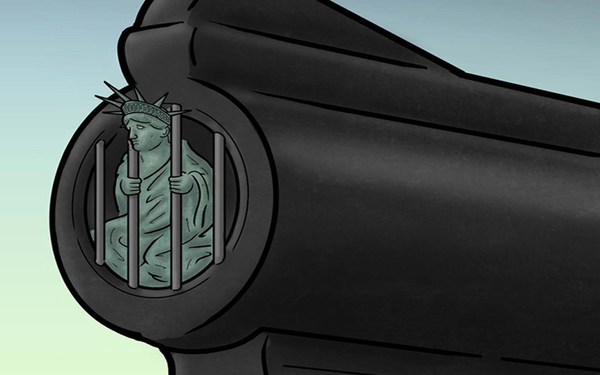
What y’all don’t realize is that Tony misspelled the word – instead of “raising” he meant “razing”!

Uncle Joe said, 4 months ago
@motivemagus
No location is disaster proof, but some locations are obviously more disaster prone than others. Blizzards, gunslingers & even tornadoes, don’t cause anywhere near as much damage as hurricanes & earthquakes.
Homeowners who didn’t have earthquake or hurricane insurance can get loans backed by Federal disaster relief funds, but unless they paid for coverage, no free money.
Regardless of what you think may be the cause, hurricanes have been causing more damage lately. More homeowners are being required to get flood/hurricane insurance & building codes are being modified to account for this. If you don’t like it, try to argue with an actuary!
MortyForTyrant said, 4 months ago
@motivemagus
The problem can be partially solved by HOW you build. I know that the traditional way to build a house in the U.S. is to nail some planks to a wooden frame and hope everything stays upright. That’s no way to build in most places. As being told in the story of the three little pigs a solid brick house is a much better option. Having an earthquake-damper below your basement makes it even safer. Floodplane? Have watertight doors and windows, move important stuff to the second floor, have washable tiles instead of wallpaper in the first floor. Tornados? Have a flat or domed concrete roof and bullet-proof windows (debris).
-
There is A LOT that can be done while building, but he U.S. is such a cheap-cheap society that does not value cars, phones, computers or houses for their real value in life – only after they are destroyed. Sometimes you need to employ “Maytag thinking” – building something sturdy saves you money in the long run…
meetinthemiddle said, 4 months ago
@MortyForTyrant
I think it was after Rita when the news was showing that one house in town that was built with hurricane prep in mind – the only one left standing for miles. The problem is that level of construction does add significantly to the cost of building. It’s not necessarily “cheap-cheap” that keeps people from building that way.
That said, Jack’s point bears some serious consideration… If you can’t or won’t build to standards that cover a reasonable assessment of risk, it’s not in anyone’s interest to keep rebuilding the first little pigs house
Tigger
said, 4 months ago
@motivemagus
You missed the point of this toon, you need to understand anyone who build in the areas you mentioned do not have Homeowners insurance with added coverage to take care of natural disasters such as flooding and wind damage.
On May 1st and May 2nd of 2010, there was a thunderstorm that ‘trained’ over Metro Nashville-Davidson County causing severe flooding. Many who were affected by the flooding lived in known flood plains and did not have a flood insurance rider on their homeowner’s insurance policy because they did not want to pay the added premium for this vital coverage. Bottom line, if you choose to live in an area known for natural disasters, it is your responsibilities to ensure you have the maximum Homeowners, Condo, or Renter’s Insurance to cover your losses, including all riders such as wind and flood damage. Be sure to read and understand the fine print of the rider and have the insurance agent explain it to you and ask if you can buy added coverage for the item that is not covered in the fine print.
Tigger
said, 4 months ago
@MortyForTyrant
No Building is safe from a Tornado not even a Brick Home. In Tennessee, there was a Tornado Warning issued, there was a Brick Home next to a Trailer, the owners of the Brick Home invited the neighbors of the Trailer to share the shelter of their basement until the danger passed. After the Tornado passed, they emerged from the basement of the brick home to discover the brick home was destroyed while the Trailer was untouched.
Everyone living in Tornado Prone areas need to invest in a Tornado Shelter, this will save their lives, the home they can rebuild, once a life is taken, it’s gone.
onguard said, 4 months ago
Build close to the Shore at or below Sea Level, fill it with Democrats and the Hurricane will come.
Rockngolfer said, 4 months ago
Back when I lived near The Outer Banks of NC they used to build 3 story condos by putting pilings in the sand, then attaching the building with galvanized straps. Great until the steel underneath the zinc starts rusting.
MortyForTyrant said, 4 months ago
@meetinthemiddle
You are right about the additional cost. But I think that if more people would build sturdy homes then the cost would go down. Today it’s an out-layer, but if you get into mass-production costs will go down – as in every other segment of the economy.
MortyForTyrant said, 4 months ago
@Tigger
I agree that a tornado is a extremely localized event and such an outcome with the brick-house vs. trailer is possible. But – to be fully open – nobody builds in bricks anymore. In Germany even normal homes – out of harms way – are poured using reinforced concrete or assembled from slabs of that. That sounds terrible for an American, so I left it out.
-
The houses look nice, they are made to look like brick houses or there are wood-panels on the outside, so you wouldn’t know driving down the street or even when entering the building. But basically they are bunkers. Damages to the load-bearing elements that result in collapse are extremely rare. Even gas explosions just knock out the doors and windows and scatter the roof-tiles.
-
After the re-unification of Germany there were a lot of multi-story, slab-concrete-assembled buildings in the East (you know, cheap, with a lot of apartments for poor people). People wanted some of them gone, they are an eyesore and lower the property value all around. But it turned out to be very, very hard to take them down. I saw a TV-report where they tried to use Dynamite to destroy one (controlled collapse). Didn’t work. Tried it again with even more holes and more Dynamite. Didn’t work again! Then they called in a structural engineer and he said the house was totally safe. So they put a full-size digger on the top (!) and tore it down panel by panel, using mechanical- and oxygen-cutters to cut through the steel. It took three month. These East-German architects went for nuclear-war-safe, it seems…