
Home Free
By Tom Toro | 1.5K FollowersAbout Home Free
For Milo, the youngest Szabo child, a disastrous home renovation is a dream come true. When Milo ventures into the woods near his home, he discovers he can talk to animals. The local critters strike up a friendship with charming Milo, and they form a ragtag team that gets into all sorts of mischief, with Milo awkwardly mediating disputes between the freewheeling fauna and his frazzled family.
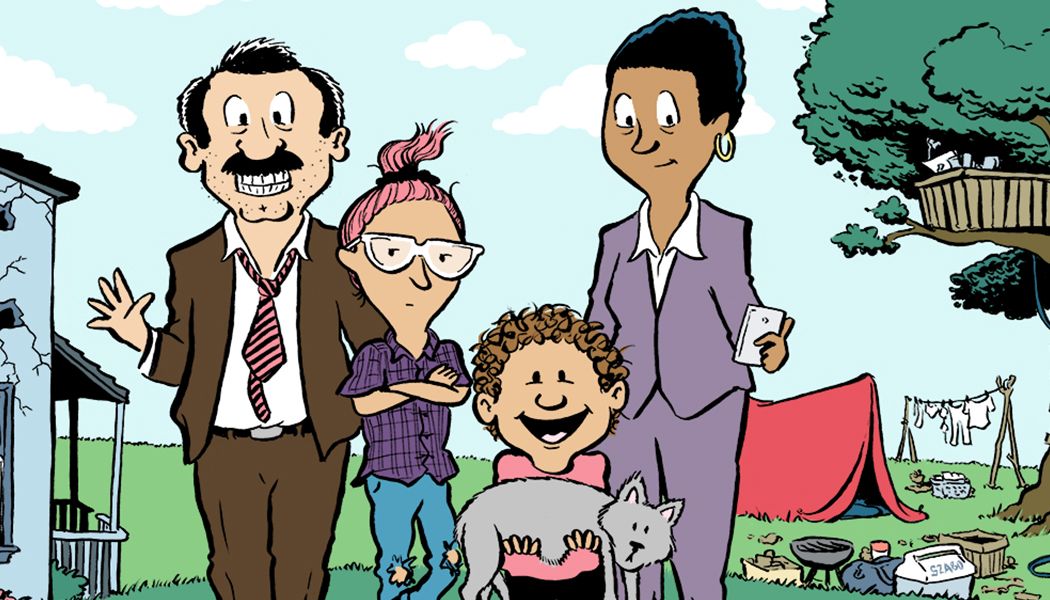
Milo's big sister, Julia, is almost in high school and not on board with "roughing it outdoors.” She knows their house is doomed to remain uninhabitable for the foreseeable future, so her only choice is to undertake a neighborhood couch-surfing crusade that requires her to temper her sardonic attitude and play nice with others.
Meanwhile, Mr. and Mrs. Szabo are barely holding it together. Every time their home is near completion, the contractors encounter a new diabolical setback. Mr. Szabo often butts into the builders' business (mayhem) or undertakes portions of the renovation to save a buck (creating costlier problems). Mrs. Szabo is an uncompromising aesthete who expects the remodel to meet her rigorous (even unachievable) standards. To survive, Mr. Szabo reverts to his rural Eastern European roots and Mrs. Szabo attempts a pared-down approach to life.
The conflict between the Szabo's aspirations for their dream home and the harsh realities they're forced to wrestle with is the comedic tension at the heart of “Home Free.”

Meet Tom Toro
Tom Toro’s inspiration for "Home Free" is close to home. It seemed like there was always a renovation project happening around his childhood home, from converting the garage into a second bedroom so Toro and his sister wouldn't have to share a bunkbed to knocking out a retaining wall and attaching a covered deck.
This crazy blend of grandiose ambition, dogged self-reliance, and extreme inconvenience formed the atmosphere of Toro's upbringing—and it forms the humor at the heart of "Home Free."
Toro's cartoons appear regularly in the New Yorker, and they've also appeared in The New York Times, Paris Review, Wired, and Playboy. His books include "How to Potty Train Your Porcupine,” "A User's Guide to Democracy,” "Tiny Hands," and a picture book collaboration with Simon Rich, "I'm Terrified of Bath Time.”
Toro was a finalist for the 2019 Reuben Award for gag cartoonist of the year. His literary fiction has been short-listed for the Disquiet International Literary Prize, and he's held writing residencies in screenwriting at the Orchard Project Episodic Lab and in playwriting at the Berkeley Repertory Theater Ground Floor. Toro attended NYU Graduate Film School, where he co-created films that played at the Cannes, Sundance, and Tribeca film festivals. He graduated from Yale, where he received the Betts Prize for his writing and drew and edited cartoons for the Yale Herald. Toro lives in Portland, Oregon, with his wife, kid, and cat.
Cast of Characters

Milo
Milo is the only member of the Szabo family who is thrilled to camp in their backyard indefinitely. Milo prefers the company of wildlife to his family—especially when he discovers he can communicate with the animals! Milo’s escapades with the local fauna gets him into plenty of jams—not to mention on his family’s nerves.

Julia
Julia is on the opposite end of the outdoorsy spectrum. She's a homebody who is beyond mortified at having to camp in the backyard with her uncool family. Julia must learn to curb her snark to befriend the neighborhood kids and hopefully get invited to their houses for long-term sleepovers.

Mr. Szabo
Mr. Szabo immigrated from Eastern Europe in his mid-20s. He had to learn English, finish school, and become an engineer, so he got a late start with family life. He is industrious, independent, frugal, and unable to resist meddling in home renovations. Outdoor living leads to a relapse of his old-world hygiene habits.

Mrs. Szabo
Mrs. Szabo does it all and doesn’t miss a beat. When she isn’t filing legal briefs, refereeing sibling spats, or taking respite in psychotherapy, she is trying to quality control their chaotic home renovation, all while acting as “interpreter of American life” for her somewhat obtuse husband.